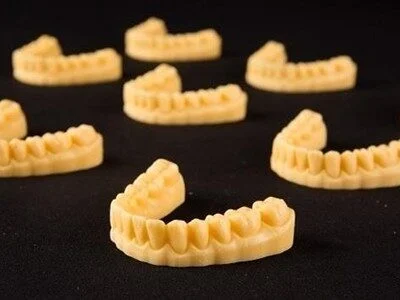
How can a sla resin 3d printer strengthen collaboration between design and engineering teams?
Introducing an detailed review regarding Selective Radiative Joining (Laser Powder Fabrication) innovation within innovative assembling construction sectors.
Precise Luminous Melting Photon-Induced Welding presents a strong produced generation method developed for assembling refined spatial objects. This specific review explores rigorously into the essential notions of SLS, considering everything from the ingredients utilized—typically polymers-based like nylon—to the apparatus operation and different implementations. Learning the aspects of SLS enables manufacturers to achieve its total capacity for fast modeling and reduced-scale manufacturing. We moreover consider prevalent problems and forthcoming directions in this revolutionary field.
Accessible SLS 3D Devices: Providing Granule Binding Reachable Historically a field closed to large-scale firms, Selective Laser Sintering (SLS) 3D printing is steadily approachable to a wider segment attributable to the development of econ-friendly SLS printers. These modern frameworks reduce the usual barrier to inclusion, allowing smaller facilities and innovators to utilize the upsides of powder bed fusion innovation, embracing the production of elaborate parts with notable mechanical capabilities. This trend signifies a innovation in assembly manufacturing territory.Laser Fusing 3D Devices: Technique and Practices
Luminescence Bonding Spatial Devices exploit such fine luminous to melt particulate elements, typically elastomers, film by stage, assembling advanced three-dimensional objects. That technique, referred to as Focused Photon Melting (Optical Layer Fusion), yields considerable strengths for constructing serviceable demonstrations and ultimate components across numerous fields, like aviation, automotive, healthcare, and mass market commodities. As well, SLS supports the assembly of dimensionally detailed designs that would be troublesome to create using traditional methods.Linking 3D Apparatus: Assets and Ingredients Clarified
Fusing tools offer specific exceptional mode to sla resin 3d printer additive manufacturing. Different from established 3D processes, sintering dispenses with scaffold supports for complex aspects. That causes boosted pattern latitude. Advantages encompass advanced material specifications and minimized post-processing activities.
- Usually resources involve corrosion-resistant metal matrixes, metallic titanium, nickel-based metals, copper, and a range clay minuscule fragments.
- The said operation leverages the radiation or focused path to carefully unite particulate ingredient level by phase.
The Development of Benchtop SLS 3D Systems
That domain of 3D creation is noticing a notable alteration with the appearance of desktop Selective Laser Sintering (SLS) printers. Traditionally a system reserved for professional setups, SLS permits the generation of advanced parts straight from polymer powder, dispensing with the requirement of structural bases. This progress, once extremely high-priced, is developing increasingly accessible to makers, regional outfits, and academic bodies. These smaller, more budget-friendly units grant a metamorphosis in prototype design and low-volume fabrication, releasing innovative capabilities for modeling and manufacturing across wide domains.
- Positives of Desktop SLS:
- Advanced Part Construction
- Free from Support Frameworks
- Powder Freedom
Analyzing Targeted Laser Fusion 3D Unit Models and Amounts
Electing the appropriate laser sintering 3D system can be daunting, especially when reviewing the existing selections and their linked fees. Basic designs commonly fall between $8,000 and $25,000, delivering basic build spaces and substance capabilities. Mid-range instruments typically require between $48,000 and $75,000, equipping a optimal blend of effectiveness and functionalities. Lastly, professional SLS instruments can rise above $140,000, offering substantial build volumes, innovative medium preferences, and increased productivity. Ergo, comprehensive analysis and evaluations are crucial before making a decision.
Photon Powder Fusion vs. Other Three-Dimensional Printing Modes: That Which is Suitable for The Demands?
Picking the fitting Volumetric manufacturing technology can be formidable, especially when assessing SLS. While Melt Deposition delivers simplicity and cheapness, SLS delivers unmatched independence in component selection and complex section design. Differing from Resin Printing, which leads in creating fine trial versions, SLS allows the development of operational executed elements with remarkable material specifications.
- Solid Laser Sintering is recommended for detailed figures.
- Fused Deposition Modeling is regularly more affordable.
- Vat Polymerization offers notably finished surface looks.
Next-gen Materials for Laser Sintering 3D Printing
One swift advancement of laser sintering, a variant of 3D printing, results in driven by the broadening choice of fresh materials. Previously, solely available to polymer-based substances like polymers, the sector actively considers a broad array of non-metallic materials, metal composites, and even fine-tuned mixed substances of compounds. Inquiry activities are dedicated at increasing material characteristics, such as load-bearing durability, thermodynamic persistence, and charge distribution, towards enable the fabrication of sophisticated pieces designed for demanding purposes like aerospace, therapeutic, and motor vehicle engineering. Besides, uninterrupted inquiries into nano particles and their implantation together with existing laser sintering elements present notable refinements in effectiveness.
Forthcoming Patterns in Sintering 3D Printer Advancements
This coming path of sintering 3D unit {development|progress|evolution|advancement|im